
AI in Personal Training: The Ultimate Guide for Coaches
At CoachFirst, we're constantly experimenting with how AI can be used to help trainers deliver great results for their clients. This guide explores the critical questions about how AI is impacting personal training — from shifting client expectations to the rise of the AI-enabled trainer.
Part 1Man vs. Machine — Will Apps Replace Trainers?
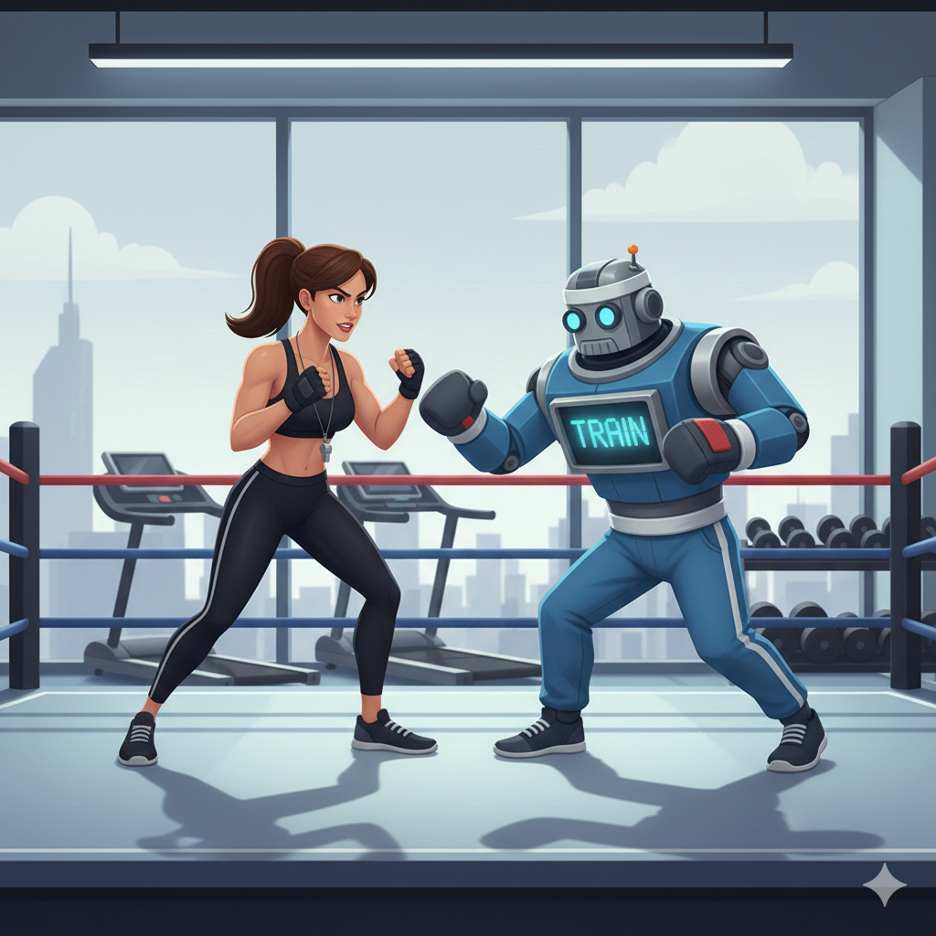
The market for AI training apps is expected to double in the next five years. Does that spell the demise of human trainers?
At CoachFirst, we're decidedly pro-trainer. Trainers and coaches that changed our lives are why we started a software business to help them thrive.
Personal trainers are certified experts, and the best ones command top dollar for their services because of the exceptional results they can deliver.
My personal trainer fixed my debilitating lower back problem after some of the best doctors and physical therapists in Boston (aka some of the best in the world) couldn't figure it out.
But that doesn't cost $15.99/month. And that's where AI training apps come in.
If you're a healthy and active person, and generally know what you're doing in the gym, AI trainers can give you the basics at a reasonable cost: helping you set goals, recommending exercises for you, and tracking your progress to help you get there.
But if you're a person who is:
- New to working out
- Adapting what you do in the gym to account for injuries
- Striving to unlock higher levels of personal performance
- Driven by the personal accountability of working with a coach
There is no replacement for a real personal trainer.
A recent report indicates that most people agree: only 10% of people prefer an AI-driven workout to one with a real human guiding them.
Demand for training is strong across the board as more people focus on their fitness and wellness, and there is plenty of room for real trainers and the AI training apps to both succeed. It's the fit that matters.
Part 2What Clients Really Want
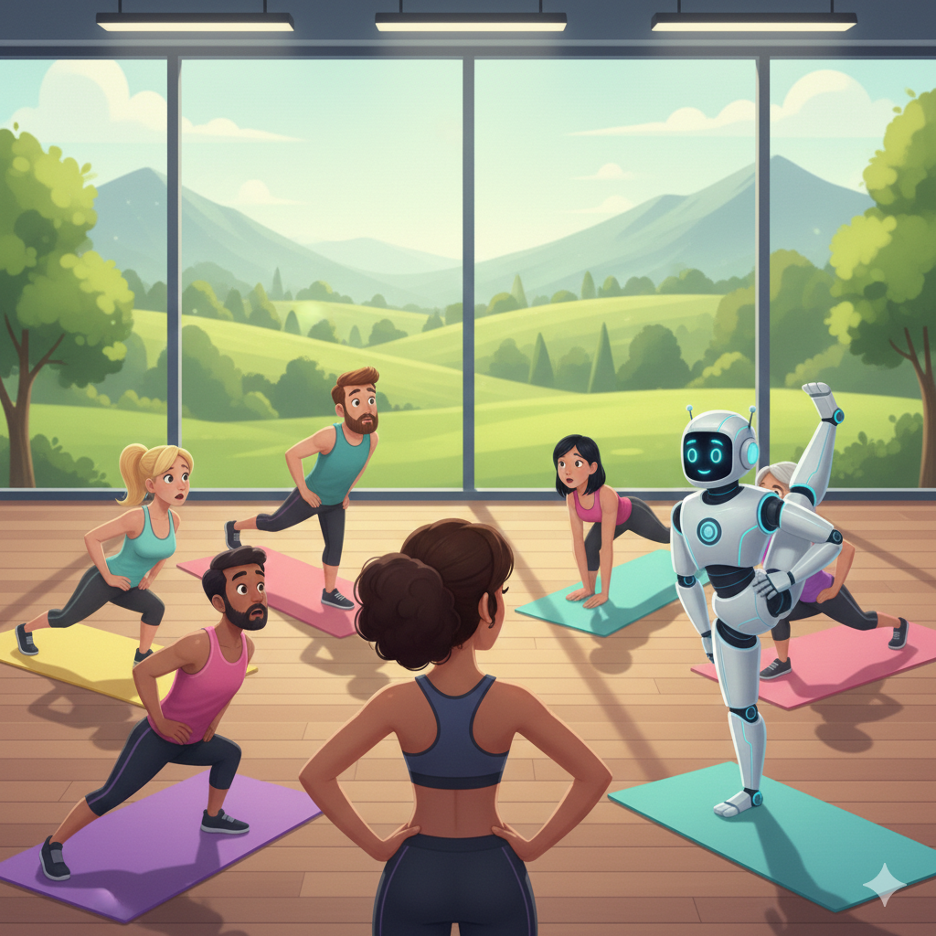
"Member engagement is stronger than ever, and so are expectations."
— Les Mills
As AI gains traction and acceptance in our daily lives, it raises the bar the way other rapid advances in technology have.
When the internet came online, people quickly came to expect that they could access any piece of information in an instant.
With smart phones and social media, expectations grew to include real-time engagement with anyone, anytime, anywhere.
And now with the mass adoption of AI, the new standard is delivering real, impactful intelligence derived from massive data sets on demand.
When it comes to fitness, clients are using that intelligence to optimize their workouts, nutrition, and recovery in pursuit of balanced, sustainable wellness.
But AI can't replace some of the biggest satisfaction drivers that keep clients coming back:
- The sense of connection they get from working 1:1 with a trainer
- The camaraderie they find in group exercise classes
- The relationships they build with other regulars at the gym
That authentic, human relationship building will never be replicated through AI (sorry Zuckerberg!).
Many large gym chains are using AI workflows in an effort to keep clients engaged. They serve up automated recommendations to work with a trainer, or visit their spa.
That can help juice a big gym's revenue and client retention, but it isn't very relevant for the small operators we work with at CoachFirst.
But where there is data, there is a big opportunity for AI to meet client needs.
Clients are leaning into areas like holistic wellness and strength training, and becoming more data-driven in those pursuits.
Savvy clients are using wearables to easily capture high-level workout information (heart rate, calories burned) and feasting on the AI-enabled insights they can provide (strain, recovery).
According to the Les Mills study, 78% of clients report using data-driven fitness tools more than they did 3 years ago, and 33% of people are using them for every workout.
The problem is those insights aren't available to the client's trainer. So the only way to know that a client is primed to push hard or needs a recovery day after a week of big workouts and bad sleep is if the client tells their trainer.
That's a gap that our team at CoachFirst is working to close, and I'll share more about our first AI-enabled features intended to do just that in a future post.
To keep clients happy and consistent in their training, the key is tailoring their training to meet them where they are on any given day and in the context of their health trends.
Part 3The Rise of the AI-Enabled Trainer

Like any great teacher or coach, personal trainers are continuous learners themselves and always looking for new and better ways to deliver results for their clients.
So it's no surprise that trainers have been quick to adopt AI tools, and they're being pragmatic about how AI is additive to their practice (and where it's not).
These are some eye-popping stats from a recent ISSA survey:
Those gains are currently concentrated in two main areas: 1) reducing admin work by automating daily tasks like scheduling and sending reminders, and 2) boosting their brand building capabilities for marketing and content creation.
But trainers report that AI can't replace essential parts of the training experience, from building the trust at the core of every great trainer-client relationship, to the real-time form correction necessary to build sustainable progress and avoid injuries.
The findings from the ISSA report reminded me of an inspiring story my dad recently shared with me.
His primary care doctor was planning on retiring because the administrative parts of his job, like note taking, were getting in the way of connecting with his patients.
Instead of engaging with his patients, the doctor's back was often turned to them while he typed notes and completed required tasks in their clinical system. That's not why he went into medicine.
Then his practice implemented an AI tool that uses voice dictation to take notes for him.
He could now look his patients in the eye and give them his full attention. He was connecting with patients, truly seeing them, and figuring things out that he may have otherwise missed.
He was back to doing what he loves and connected to why he wanted to practice medicine in the first place: helping his patients.
Instead of retiring, this doctor is re-energized and talking with excitement about the future of his profession.
AI is going to allow personal trainers to operate in their "zone of genius" more often — and the potential of that shift is staggering.
Imagine an army of AI-enabled trainers, freed from administrative hassles:
- Locked in on their clients
- Digging into the latest research
- Pursuing new certifications
- Expanding their practice
If you pair that AI-enabled trainer with a motivated and expanding client population thirsty for expert guidance, well…it's fun to think about the possibilities!
Part 4Taking Great Trainers to the Next Level
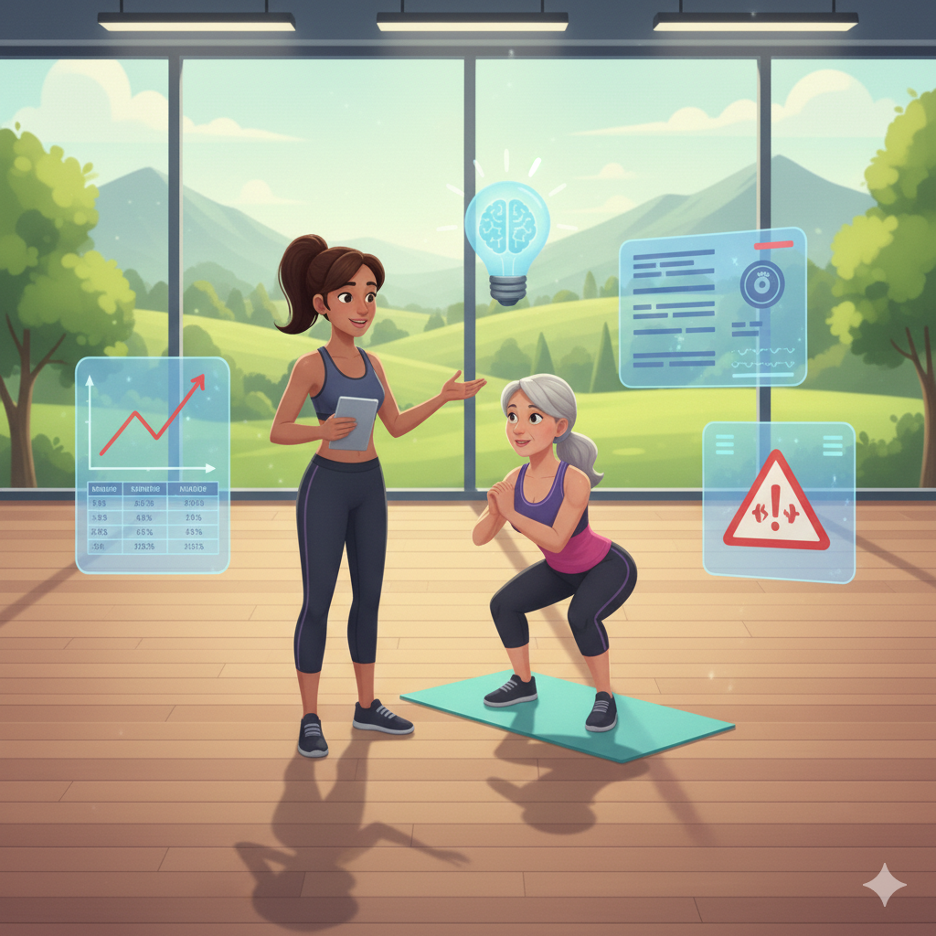
When we started CoachFirst, our mission was simple: eliminate as much admin work as possible so great trainers had more time to focus on their clients and their business.
Our apps deliver on that mission today, making it everyday tasks like booking and payments a snap, and automating workflows like sending reminders for upcoming sessions and when it's time to buy another package.
And then I was talking to a coach who said this simple thing that opened up a whole new way CoachFirst can help trainers:
"I basically want a medical record for my clients."
It makes perfect sense: great trainers are only as good as the information they have about their clients.
Even the best trainers don't have perfect recall of a client's injury history, or how they have performed on every exercise in their past workouts.
Doctors use medical records that include a vast amount of important data like a patient's medical history, allergies, and potentially dangerous drug interactions.
They're able to better diagnose illnesses, safely prescribe medicine, and manage the patient's health because that data is connected all in one place.
It's a bit of a running joke at this point, but I have been injured so many times that even I have lost count. Frayed rotator cuffs, a fractured vertebra, a torn hamstring tendon, and enough broken bones for my wife to joke that I have osteoporosis.
It's unreasonable to expect my trainer to remember all of that, especially the older injuries. A new band exercise might put too much pressure on the finger I broke four years ago, can I blame him for forgetting about that one?
My trainer captures a lot of that information, but it's buried somewhere in the notes app on his phone. The bottom line is that it takes way too much effort to review all of that history manually, he needs it served up when he's programming and the information matters.
It's also too much hassle to track every set and rep in a workout, detailed notes on form, or modifications we made along the way. Trying to capture that level of detail takes focus off of the client, or adds hours of work to a trainer's day.
Which is why we built Intelligent Notes for CoachFirst.
With Intelligent Notes, trainers can stay locked in on every rep and every correction while capturing detailed client data. That data gives them the insights to tailor their programming based on a rich client profile that includes session notes, client goals, injuries and limitations.
Part 5Intelligent Notes = Intelligent Trainers
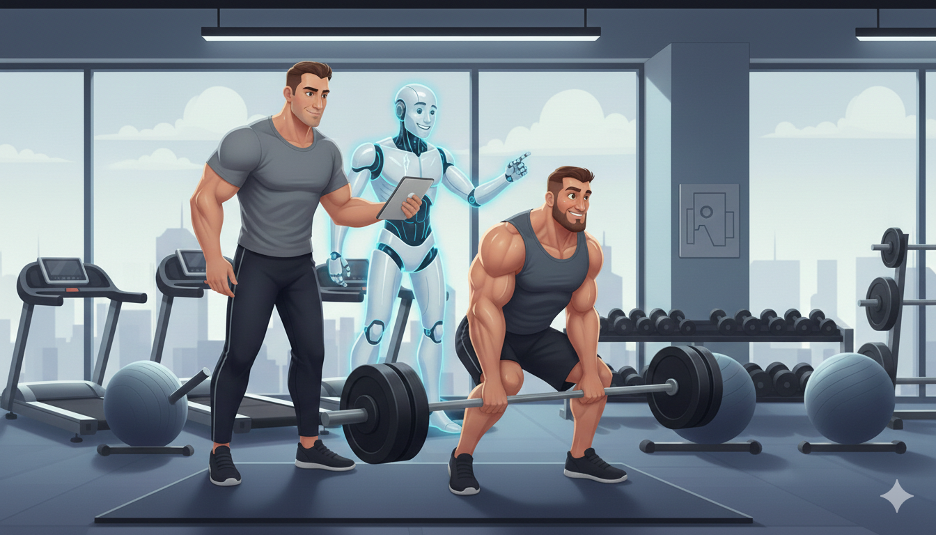
In spite of any old cliches about the intelligence of personal trainers, the ones I know and work with on a regular basis are all smart and curious. They're constantly learning, reading the latest research, and deepening their understanding of the human body.
But as I noted in a previous post, a trainer is only as good as the information they have available to them. It's the same for doctors, teachers, CEOs...any of us.
Which is why we built Intelligent Notes in CoachFirst.
With Intelligent Notes, trainers can simply use their voice to capture, organize, and save vital information about their clients like:
- Fitness and wellness goals
- Injury histories
- Session programming
- Set and rep data
- Exercise modifications
All without touching a keyboard or navigating endless drop downs and search boxes. It's that easy.
With that level of information, all organized and connected in one place, Intelligent Notes arms trainers with the insights they need to create the best client programming possible. These are some of the ideas we're currently working on adding:
- Identifying trends in client performance
- Flagging the risk of over-training, and when the time is right to push harder
- Rotating in new exercises to keep clients engaged and on track
Just like AI itself, Intelligent Notes is such a game-changer that we haven't scratched the surface of what it can do yet.
Which is why we're looking for help.
We're putting Intelligent Notes in the hands of select trainers so they can use it and give us their input and ideas to guide where we take it next.
If you know a great trainer that has these qualities, they're a great fit to road test Intelligent Notes:
- Interested in new tech for trainers
- Loves providing honest, direct feedback
- Wants to shape a new product to meet their needs
Reach out to our team at info@coachfirst.com to get the ball rolling.
Back to Articles